
Arising from the circular marine by-product economy, these hydrolysates are regarded as highly effective functional ingredients that can successfully support the reduction of fishmeal in commercial diets and maintain growth performance comparable to high fishmeal diets and significantly improve gut health, non-specific immunity and disease resistance.
Protein hydrolysates, derived from the enzymatic hydrolysis of marine byproducts, are well regarded as high-value functional ingredients in aquaculture. These ingredients provide a complex profile of small peptides and free amino acids that offer multi-dimensional benefits:
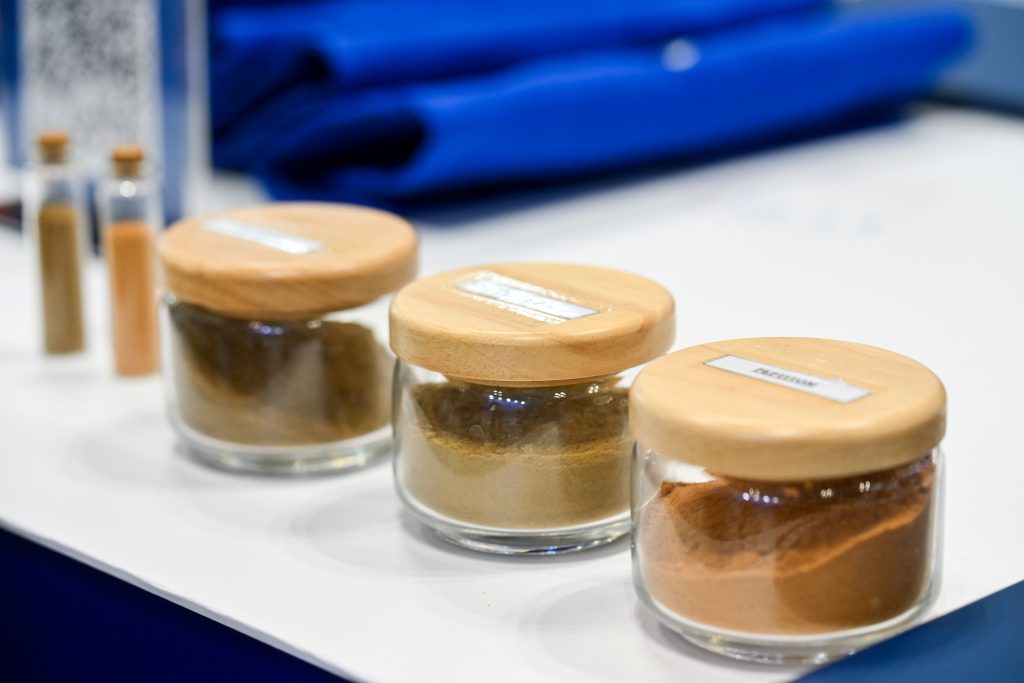
The objective of this research was to evaluate the efficacy of three types of marine hydrolysates manufactured by Aquaproducts in Vietnam, as fishmeal (FM) replacements in red seabream (Pagrus major) diets in terms of impact on growth, immunity, gut health and pathogen resistance. Peptitom a shrimp protein hydrolysate, Peptisalm, a salmon viscera hydrolysate and Peptimar, a marine fish hydrolysate from canning side streams are marine based functional protein hydrolysates positioned for aqua, livestock and pet food applications.
This collaborative research effort was conducted by Jeju National University and Aquaproducts, combining academic expertise and industry innovation in marine bioactive ingredients.
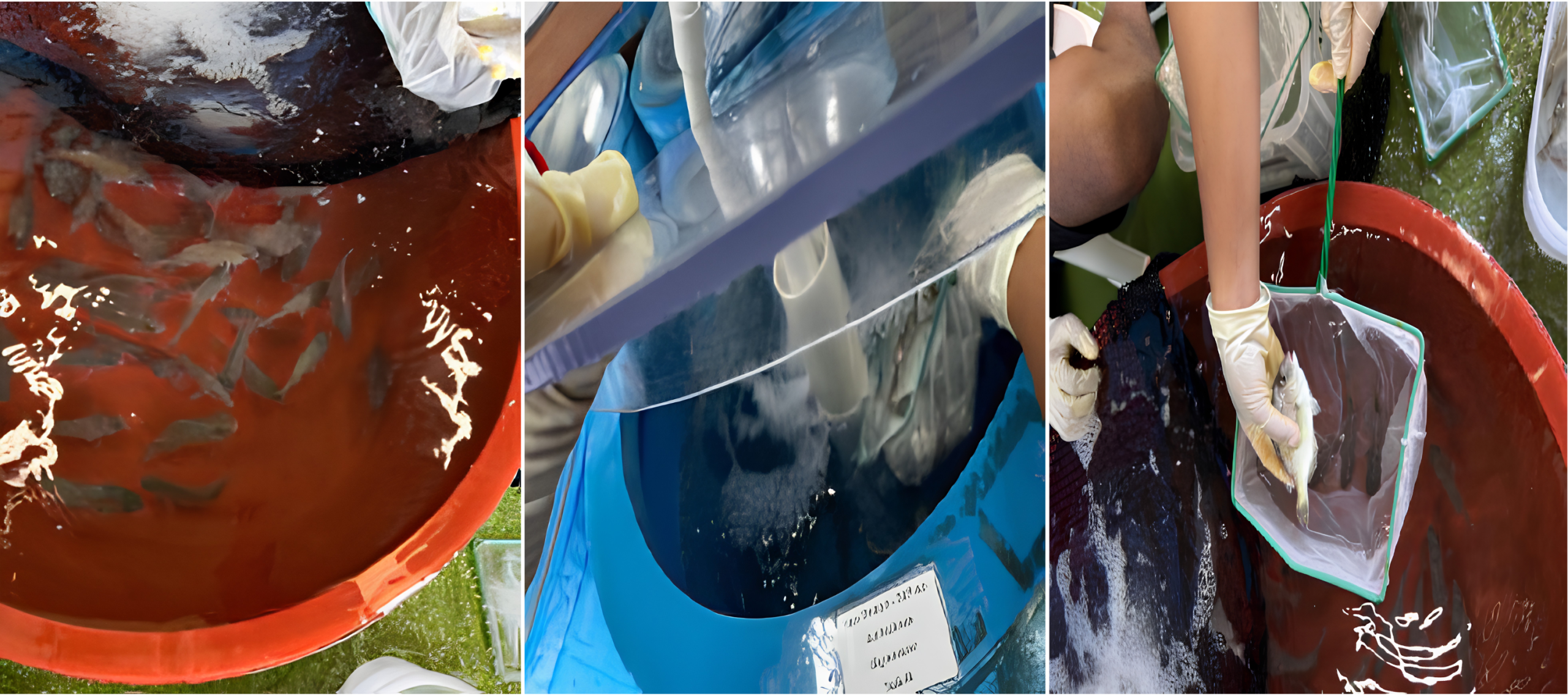
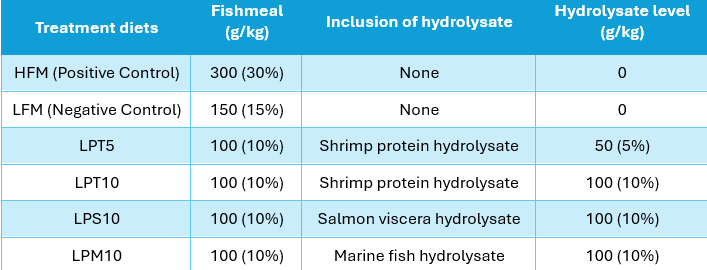
This study utilised a 10-week feeding trial with 576 juvenile red seabreams (initial weight, 41.10±0.16g). There were 6 experimental groups and 3 replicates for each group. The trial compared a high fishmeal (HFM) control against a low fishmeal (LFM) control and four experimental diets where fishmeal was further reduced and supplemented with hydrolysates. All diets were formulated to be isonitrogenous with 49.8% crude protein (CP) and isolipidic at 13.1% crude lipid (CL). Experimental diets (LPT5, LPT10, LPS10, LPM10 as shown in Table 1, utilisedutilized a base of only 100g/kg fishmeal. The marine hydrolysate in diet LPT5 partially replaced 50% of the fishmeal component while in diets LPT10, LPS10, LPM10, marine hydrolysates replaced all the fishmeal.
Post-trial, fish were subjected to bacteria Edwardsiella tarda challenge at a concentration of 1.2×10⁸ CFU/mL) via intraperitoneal injection to evaluate survival over 10 days.
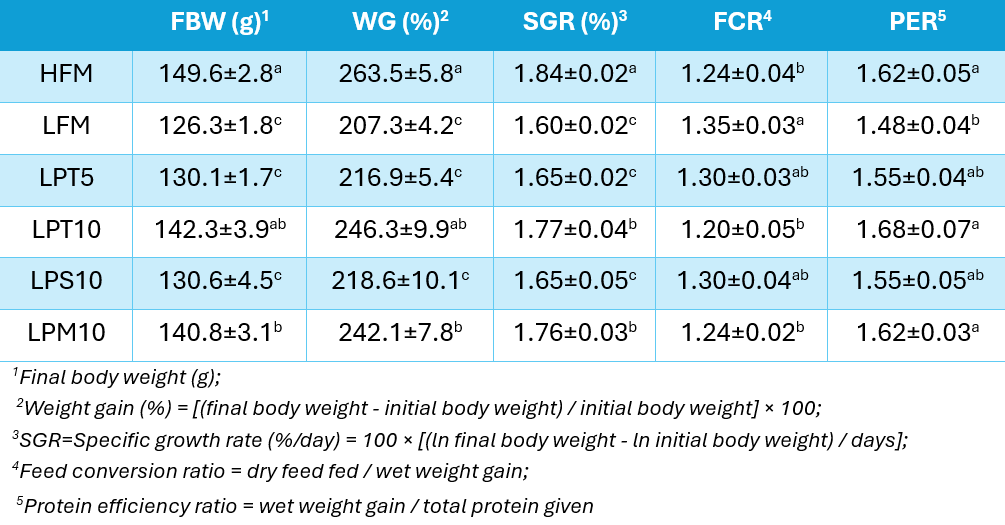
The trial demonstrated that the shrimp protein hydrolysate (Peptitom) supplementation effectively recovered the growth loss associated with fishmeal reduction. The LPT10 group with marine fish hydrolysates achieved growth performance statistically comparable to the HFM positive control in final body weight (FBW) and weight gain (WG), significantly outperforming the LFM group.
Fish in group LPT10 recorded the best FCR (1.20), indicating superior metabolic efficiency in converting dietary protein into body mass.
Dietary hydrolysates significantly bolstered non-specific immune defences. The LPT10 group emerged as the top performer across key markers.